TV Wall Design: WPC vs. PU Stone? Material Comparison and Site Details
Summary
Choose WPC for wood-grain slats, or PU Stone for dimensional stone textures. Both can be used for TV walls, but anchor points, outlets, and lighting must be designed before finalizing the material choice.
Key takeaways
- WPC stands out with fluted slat lines and wood grain, while PU Stone stands out with dimensional stone textures and surface relief.
- Budget comparisons must be calculated from the actual area and include fastening systems, wall preparation, electrical systems, and labor, rather than comparing price per panel alone.
- TV mounting brackets must be secured to the wall or a weight-bearing structure, without placing weight on the decorative panels.
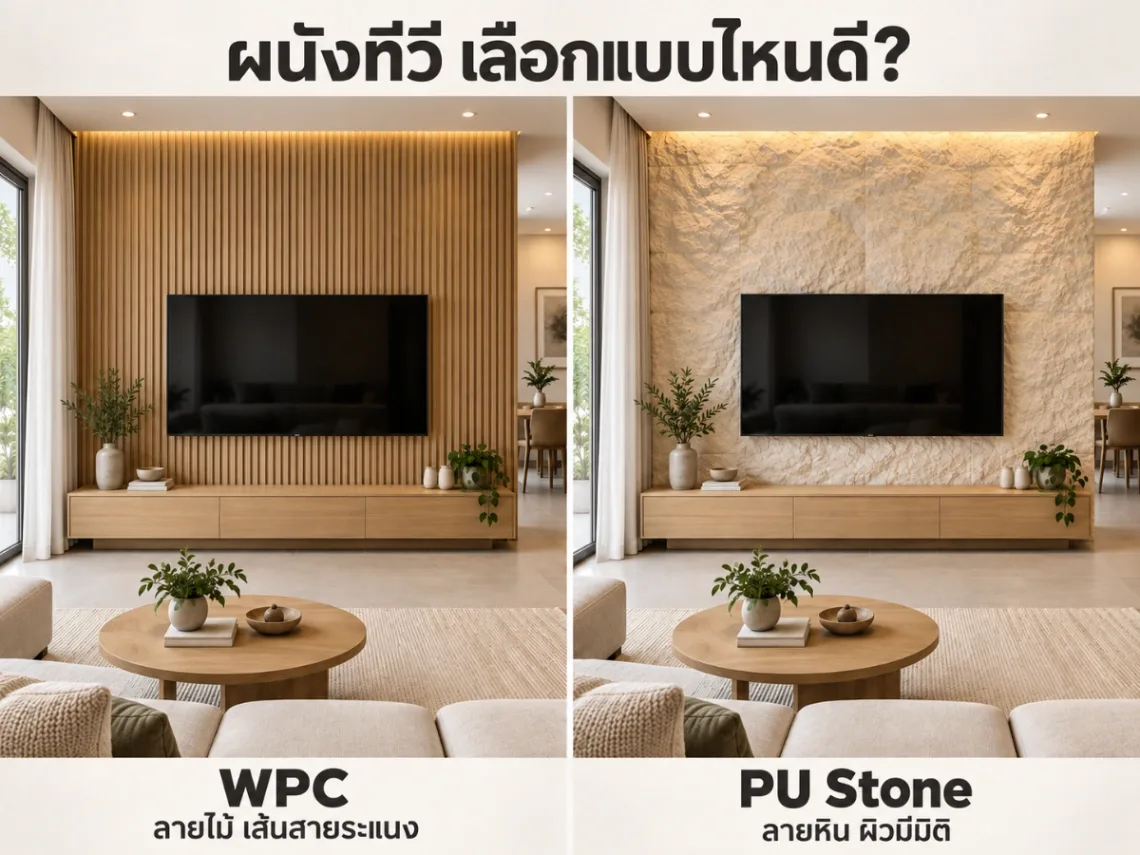
Choose WPC when you want fluted slat lines and wood-grain tones, while PU Stone is an option for textured stone surfaces with dimension. Both materials can be used for TV walls when the model and installation system match the space, but TV anchor points, electrical outlets, and lighting should be designed before selecting the final wall appearance.
Overview Comparison Based on Desired Look
AspectWPC SlatsPU StoneKey FeaturesContinuous grooves and wood-grain or decorative colors per modelStone texture and surface relief based on designLighting ConsiderationsShadows from grooves and slat alignmentShadows from textured surfaces and joint clarityPre-Installation DetailsGroove lines, edge trimming pieces, and coverage widthPattern arrangement, joints, corners, and surface thicknessMaintenanceCheck cleaning methods and groove care for the actual modelCheck cleaning methods for textured surfaces of the actual modelStart with Furniture and Room Size
Review the floor color, TV cabinet, sofa, and room lighting together. The wall does not need to be fully covered with material on every side. If you want the TV to be the main focal point, you can design the material for a specific section and leave the rest as a plain wall, but joints must align with the cabinet and screen size.
Compare sample colors in the actual room during both daytime and with lights turned on, as screen images may not accurately show the true colors and textures of the materials.
Arrange Lighting Suitable for TV Viewing
Test side wall lights or concealed lighting to observe shadows on the materials, and view from the actual usage position. Check whether lights reflect off the screen or cause visual distractions. More textured surfaces may produce more prominent shadows, which may not suit every room.
Conceal Wires Neatly While Retaining Repair Access
- Determine the positions of outlets, signal cables, and equipment before closing panels.
- Prepare cable pathways and access panels for equipment requiring maintenance.
- Check the clearance behind the TV and ventilation according to the manuals for the TV and devices.
- Secure mounting brackets to the wall or supporting structure, without placing weight on the decorative panels.
- Check the total thickness to ensure brackets, outlets, and TV cabinets work together properly.
Compare Total System Budgets
WPC and PU Stone have different dimensions per panel, so do not compare prices strictly on a per-panel basis. Calculate based on the actual area, cutting plans, trims or corner finishing, fastening systems, wall preparation, electrical systems, and labor costs. Request a complete itemized list before deciding which material is more economical.
Choose the Style Best Suited for the Job Site
If you prefer groove lines and wood tones, start looking at WPC Nordic Series. If you prefer stone textures and dimensional shadows, start looking at PU Stone by Giraffe, then compare samples against your lighting and existing furniture. If you wish to use both materials together, test the layout and surface transition points before ordering.
Before starting installation, inspect the wall condition, mounting systems, and outlet positions. If you need advice, you can send photos of your space to Feel Wood for assistance in reviewing options.
Frequently Asked Questions
Which is cheaper, WPC or PU Stone?
You must compare specific models, quantities, and the total scope of work. Do not conclude based solely on the price per panel because dimensions and installation systems differ.
Can a TV be mounted on a wall covered with PU Stone?
Yes, provided you prepare brackets and anchor points to the wall or a suitable supporting structure. PU Stone panels are not designed to bear primary loads.
Do these two materials help with soundproofing?
Soundproofing properties should not be assumed based on the material name or thickness. Test data and specific wall system details are required for desired acoustic performance.
Frequently asked questions
Which is cheaper, WPC or PU Stone?
You must compare specific models, quantities, and the total scope of work. Do not conclude based solely on the price per panel because dimensions and installation systems differ.
Can a TV be mounted on a wall covered with PU Stone?
Yes, provided you prepare brackets and anchor points to the wall or a suitable supporting structure. PU Stone panels are not designed to bear primary loads.
Do these two materials help with soundproofing?
Soundproofing properties should not be assumed based on the material name or thickness. Test data and specific wall system details are required for desired acoustic performance.