Why Wooden Doors Need Finishing and How to Choose the Right Color for Beauty and Durability
Summary
Finishing a wooden door plays a vital role in protecting the wood, minimizing moisture absorption and release, preventing sun damage and dirt buildup, and extending its lifespan. Options include clear finishes, transparent wood stains, and opaque paints depending on the home style and installation location.
Key takeaways
- Finishing a wooden door helps reduce swelling, shrinkage, and cracking caused by moisture while protecting against sunlight and dirt.
- Coat the wood thoroughly on all sides, including the front, back, edges, top, and bottom of the slab.
- Color options are divided into 3 main groups: clear natural finishes, transparent wood stains, and opaque paints.
- Exterior doors require dedicated exterior-grade finishing systems and should be used alongside eaves or weather protection.
- Always test the color on an actual wood sample under the installation site's lighting conditions before deciding.
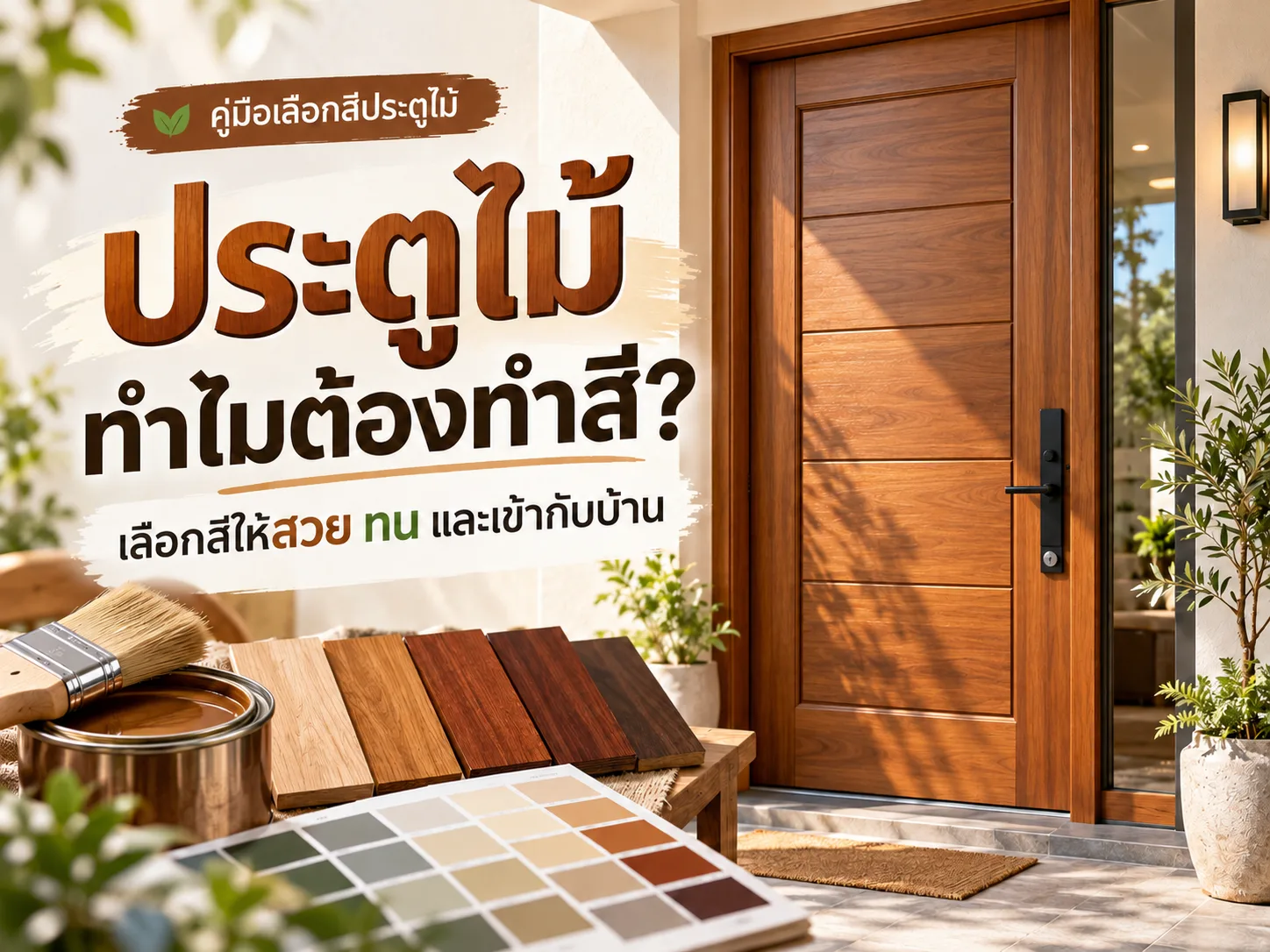
Why Do Wooden Doors Need Finishing?
Many people may assume that because wood has a natural color and grain, additional finishing is unnecessary. In reality, wood finishing serves functions far beyond simply changing the door color; it acts as a wood protection system and helps extend its service life.
1. Helps Reduce Moisture Absorption and Release in Wood
Wood naturally absorbs and releases moisture from the surrounding environment. Excessive or frequently fluctuating moisture levels can cause the wood to swell, shrink, warp, or crack. An appropriate finishing system or coating helps minimize direct contact between the wood and moisture.
Importantly, a wooden door should be coated thoroughly—not just on the visible front face, but also on the back, edges, top, and bottom of the slab.
2. Protects the Wood Surface from Sunlight
Sunlight and UV rays can alter the color of wood over time, causing the surface to fade or darken. For semi-exterior doors or those exposed to sunlight, selecting an exterior-grade finishing system to protect the wood surface is crucial.
3. Helps Minimize Stains and Dirt
Unfinished wood easily absorbs water stains, dust, and natural oils from hands. A protective surface coating makes cleaning easier and maintains the beauty of the door surface for a long time.
4. Preserves the Beauty of the Wood Grain
Proper finishing enhances the wood grain, adds dimension, and highlights the unique character of each wood species.
5. Helps Extend the Lifespan of the Door
Properly finished and maintained wooden doors last significantly longer than leaving the wood raw, especially in areas exposed to moisture or sunlight.
Guidelines for Choosing Wooden Door Colors
Choosing a wooden door color depends on the wood species, home style, installation location, and the homeowner's preferences, categorized into three main groups.
1. Clear or Natural Finish
Ideal for those who want to showcase the original color and grain of the wood, accentuating its natural beauty and texture. Suitable for Modern, Minimal, Scandinavian, and Tropical style homes. Note that the wood color may appear slightly darker or richer after application, so testing on an actual wood sample is recommended.
2. Transparent Finish or Wood Stain
Suitable for adjusting color shades while keeping the original wood grain visible, such as natural wood, oak, walnut, dark brown, teak, or smoky wood tones. This helps match the door easily with interior decor. It should match the color temperature of the majority of the furniture in the house.
3. Opaque Paint
Involves applying paint to partially or completely cover the wood grain, such as white, cream, gray, or black. Ideal for projects that require a controlled color tone to harmonize with walls or overall design, such as Modern or Contemporary styles, though it reduces the natural charm of the wood.
Choosing Door Colors by Home Style
- Minimal Homes: Suited for natural wood tones or light colors like oak or natural wood for a relaxing visual appeal.
- Modern Homes: Can use natural wood tones, dark walnut, gray, or solid black and white.
- Scandinavian Homes: Suited for bright, warm wood tones like natural oak or light wood.
- Luxury or Modern Luxury Homes: Dark wood tones like walnut or dark brown help enhance a sophisticated and dignified atmosphere.
- Tropical or Resort-Style Homes: Colors close to nature help create a relaxing ambiance and connect with outdoor spaces.
Differences Between Interior and Exterior Doors
While the same color tones can be chosen, the finishing systems must differ. Interior doors can focus more on aesthetics and texture, whereas exterior doors must use dedicated exterior-grade paint systems specifically designed to withstand sun and rain. Additionally, eaves or awnings should be designed to provide extra protection.
Precautions Before Deciding on a Color
Colors should not be chosen based solely on a screen or catalog, as wood species, original base color, grain, sanding, number of coats, and lighting at the installation site all affect the actual appearance. You should test the finish on a real sample of the same wood species under actual lighting conditions before making a final decision.
Frequently asked questions
Why do wooden doors need to be finished even if I do not want to change the original color?
Finishing acts as a protective system for the wood, reducing moisture absorption and release, preventing wood swelling, warping, or cracking, blocking UV rays from sunlight, and making it easier to wipe away stains.
Which areas of a wooden door should be coated with finish?
It should be coated thoroughly on all points, including the front face, back surface, door edges, top edge, and bottom edge of the slab.
Can interior and exterior doors use the same paint?
They can use the same color tones, but the finishing systems must differ. Exterior doors specifically require exterior-grade systems that can withstand weather conditions, moisture, and sunlight.
How many main groups are wooden door colors divided into?
They are divided into 3 groups: clear or natural finishes, transparent finishes or wood stains, and opaque paints.